Margaret "Margie" Whitmore-Hessian · Editor-in-Chief · Field Report
On Objects That Wait, and Objects That Move
This week's catalogue ran heavily toward objects that hold things: time, cargo, persons, weather. Margie Whitmore-Hessian, filing from a hotel in Menton, has a position on what this means.
Filed from Menton, as the Light Goes
I am writing this from the Hotel des Anglais in Menton, which Perpetua Vane-Mosswick recommended to me in Antibes last week with the words 'it is almost too solid to be comfortable.' She was correct on both counts. The walls are approximately sixty centimetres of pre-war plaster. When the man in the adjacent room set down his luggage, I felt it in my molars. I have not slept well, but I have slept substantially, which I think is the relevant distinction.
It was Perpetua who first used the phrase 'objects that wait' in my presence, referring to her late third husband's steamer trunk, which had occupied the same corner of a Lyons townhouse for forty-one years without being opened. She mentioned this the way one mentions the weather. I have been thinking about it since the boat from Corsica, which was delayed, and during which I had considerable time to think.
The Catalogue Has Developed a Posture
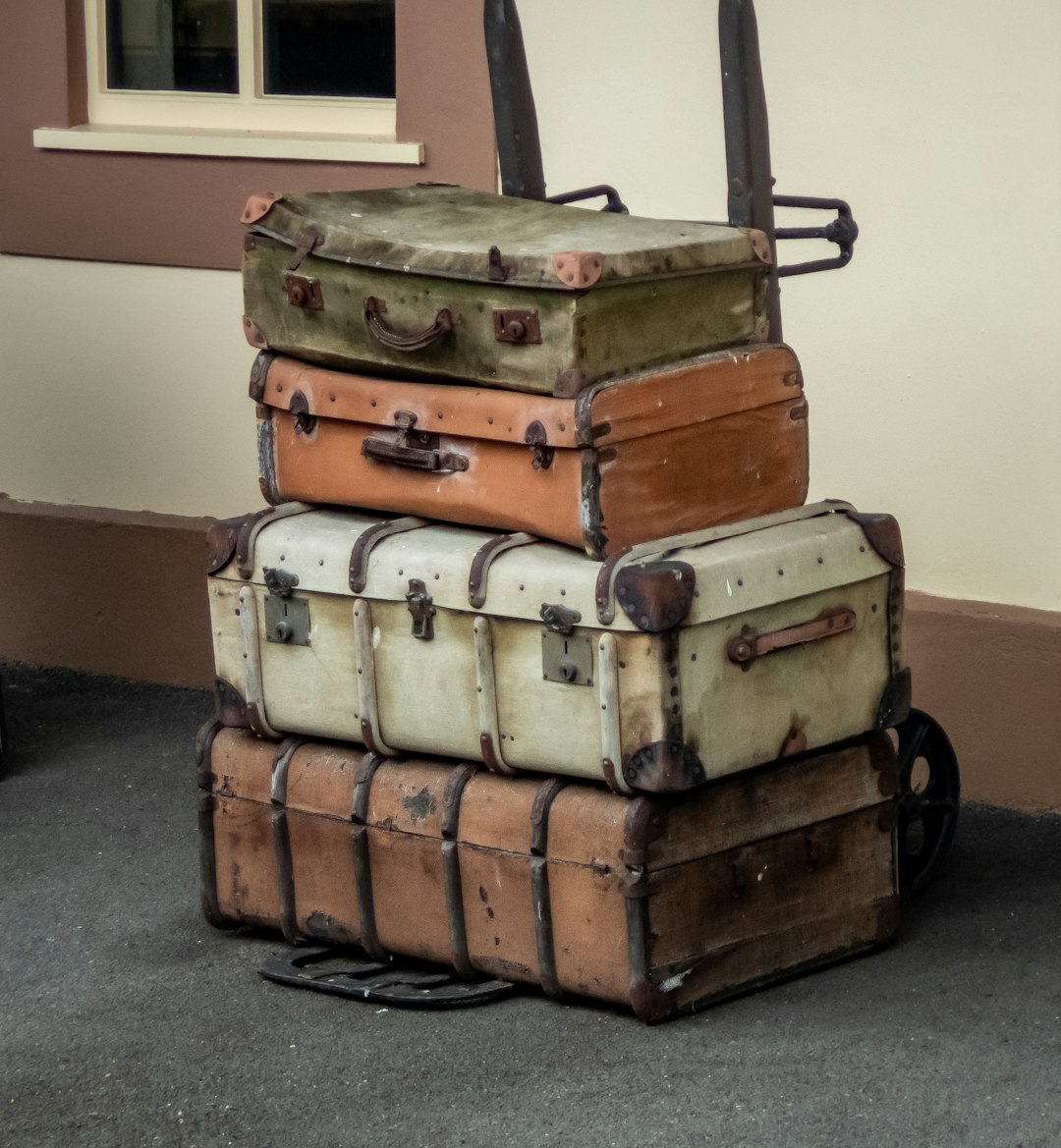
This week's entries share something that I do not believe Teddy, who assembled the queue, intended. The entries are, almost without exception, objects built to contain. The Steamer Trunk, Vintage contains belongings. The Cruise Ship, Ocean Liner contains persons, ballrooms, and at least four categories of buffet. The aircraft carrier contains aircraft, which is almost too recursive to catalogue. The windmill contains the mechanism by which grain becomes flour, which is a more intimate kind of containment than it first appears.
The Clock, Grandfather is the difficult case. I am aware that Bart will write me a note about it. He writes notes on small cards, in a hand I find unnecessarily legible, and slides them under the relevant office door. Last month he slid one under what he believed to be my door, but I was in Reims with Rodrigo, and the note was discovered by the Director of Editorial Operations, who forwarded it to me without comment. The note said: 'The edible category is not a crisis.' I had not said it was. But I took his point.
What It Means to Hold Something at Scale
There is a difference between an object that incidentally holds things and an object whose entire structural rationale is the act of holding. A cardboard box holds things. We do not catalogue cardboard boxes. We catalogue objects whose capacity for containment has become, through scale or material commitment, a defining fact of their form.
The Steamer Trunk, Vintage is not large because trunks are large. It is large because the life it was built to transport, the full wardrobe, the hatboxes, the correspondence, the seven-week crossing, was itself large. The trunk's girth is a record of a certain kind of travel, the kind that assumed you would not return quickly and that you would need, upon arrival, to be fully yourself. Modern luggage is optimized for overhead bins. The trunk was optimized for arriving with one's complete situation intact. These are not the same ambition.
A contemporary ocean liner of the larger class displaces roughly 100,000 gross tonnes and carries upward of 5,000 passengers. The Cruise Ship, Ocean Liner does not achieve this figure by accident. The hull's volume is the product of a calculation: how much human life, measured in cabins and corridors and dining rooms, can be made seaworthy. The answer, it turns out, is quite a lot. The girth is the answer made physical.
The Clock and the Question of Purposive Mass
I will admit that I have a personal relationship with grandfather clocks that may be compromising my analysis. My uncle Bertram, who founded this publication in what the masthead currently puts at 1971 (it was 1962 when I checked in August, and I have stopped checking), kept a grandfather clock in the hallway of his house in Dorset. It was approximately two metres and ten centimetres tall. It had a pendulum of considerable mass and deliberate swing. When it struck the hour, the dog left the room. When it struck midnight, the dog left the county.
The grandfather clock's cabinet, in the larger examples, runs to forty or fifty centimetres in depth. This volume exists to house the weights, the pendulum, and the escapement. Remove the cabinet and the mechanism has nowhere to swing. The girth is not decorative. It is load-bearing in the most precise sense: it bears the load of the clock's own operation. Eli Hartwell made a related argument about purposive girth in her May piece. I want to note that I arrived at this position independently, on a dock in Corsica, some days before reading her column. The positions are adjacent. They are not identical.
The claim this publication should make, and which I am making now, is this: the thicccest objects in the catalogue this week are not large because largeness was available to them. They are large because the thing they were built to do required a specific volume of space, and that volume, once committed to in steel or oak or reinforced concrete, became the object's primary fact. The Clock, Grandfather keeps time. The trunk keeps a life. The ocean liner keeps five thousand lives, briefly, at sea. The girth in each case is the keeping, made solid.
The hotel in Menton has a steamer trunk in the corridor outside room fourteen. It is approximately one metre in length, bound in brass, and has not, to my observation over four days, been moved. The staff walk around it with the practiced indifference of people who have decided not to make it their problem. The publication has been in continuous operation since my uncle Bertram founded it. The editorial board recommends leaving the trunk exactly where it is.
A new entry every morning. Get it delivered.