From the Editorial Board · Field Report
The Bagger 288: The Thiccc-est Machine on Earth
At 96 metres tall and 220 metres long, the Bagger 288 is the largest land vehicle ever built. The editorial board examines what it means to be truly, structurally, irreversibly thiccc.
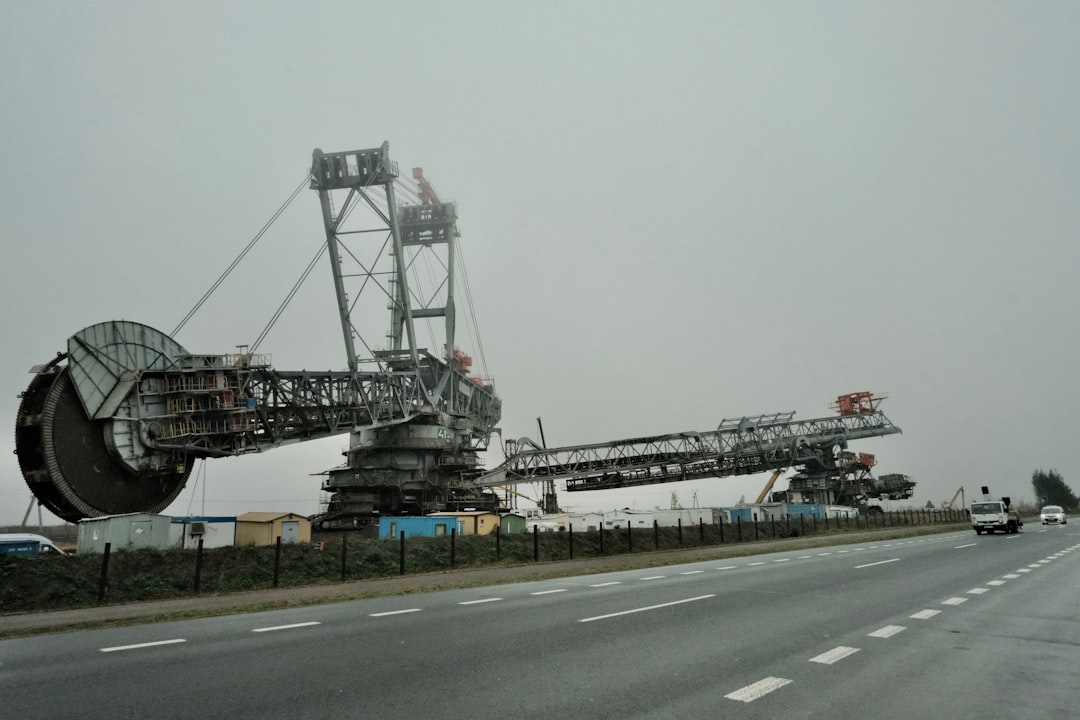
There is a particular kind of machine that does not merely perform a function but embodies one. The Bagger 288 digs. This is its purpose. Everything about its form, the sprawling crawler tracks, the 18.5-metre bucket wheel turning at the speed of deliberate inevitability, the counterweight booms stretching backward like the tail of some geological herbivore, exists solely in service of digging. And it digs at a scale that requires new vocabulary.
The machine removes 240,000 tonnes of overburden per day. To understand what this means, consider that a standard dump truck carries around 30 tonnes. The Bagger 288 would require 8,000 of them, working around the clock, to match a single day's output. The machine does not work in shifts. It works.
The Grammar of Scale
Thiccctionary defines thiccc not as a simple adjective of size but as a quality of structural commitment. The Chesterfield sofa is thiccc not merely because it is large but because every dimension of it, the rolled arms, the deep button-tufting, the squat legs, communicates an absolute refusal to be modest. The Bagger 288 operates in this same register, at an order of magnitude that makes the Chesterfield look like a throw pillow.
Its bucket wheel alone, the rotating assembly at the machine's forward end, has a diameter of 21.6 metres. A five-storey building is approximately 15 metres. The wheel, in other words, is taller than the building in which many of the engineers who designed it would have worked. Each of its 18 buckets holds 6.6 cubic metres of earth. They rotate through their circuit at a pace that is, depending on your perspective, either gratifyingly unhurried or deeply alarming.
On Being the Largest
The Bagger 288 is the largest land vehicle ever built by dry mass. This record has been held since 1978, when the machine was completed by Krupp (now ThyssenKrupp) for the Hambach open-cast lignite mine in Jülich, Germany. Forty-eight years is a long time to hold a title. Most records of this kind have a natural half-life measured in decades, because the pressure to exceed the previous superlative is, in most industries, irresistible.
The Bagger 288's record has endured because the engineering problem it was built to solve, extracting lignite at scale, has not produced sufficient demand for a larger machine. It is, in the most literal sense, enough. It is exactly as thiccc as the situation required, and not one metre more. This is, the editorial board notes, a form of restraint so extreme it becomes its own kind of excess.
The Question of Movement
The Bagger 288 moves. This is perhaps its most disconcerting quality. Machines of this scale tend toward permanence, the Hoover Dam does not, under ordinary circumstances, relocate. The Bagger 288 proceeds across the landscape at a maximum speed of 0.6 kilometrehs per hour, which is roughly a third of a slow walking pace, on twelve crawler track units each 3.8 metres wide.
In 2001, it was moved 22 kilometres across public roads from one mining site to another, a journey that required the removal of road signs, the temporary demolition of a bridge, the temporary burial of a motorway, and three weeks. The convoy moved through the German countryside at night, illuminated, at a pace that eyewitnesses reported as both majestic and faintly threatening. This is correct. This is what thiccc looks like in motion.
What the Bagger 288 Teaches Us
The machine's name offers a small clue to the German engineering sensibility: Bagger means digger. 288 is the model number. There is no grandeur in the designation, no attempt to invoke mythology or suggest qualities beyond the literal. It is a large digger. It is model 288. This is sufficient.
For Thiccctionary, the Bagger 288 represents a theoretical limit: the point at which the logic of scale, followed faithfully and without deviation, arrives at something for which the ordinary grammar of size is simply inadequate. Big does not apply. Massive is approximate. Enormous suggests something that might eventually be understood. The Bagger 288 cannot be understood in the usual way. It can only be acknowledged.
The editorial board recommends standing approximately one kilometre away and taking a moment.
A new entry every morning. Get it delivered.
An editorial response
Eliza "Eli" Hartwell · Staff Writer
The Bagger 288 is incredible, yes. It is also one machine. A bollard is thiccc every single day, in every weather, without requiring its own zip code.